

In Ethiopia, the public health landscape is complex. Approximately 84 percent of the population exposed to some degree of malaria risk; the country has one of the highest burdens of neglected tropical diseases (NTDs) in Africa; and pneumonia ranks as the leading infectious cause of death among children under five. South Ethiopia, in particular, has experienced a recent malaria resurgence — with mobile populations being especially susceptible.
Since 2004, Malaria Consortium has worked closely with the government and local partners to strengthen health systems, reduce malaria transmission, and prevent and manage debilitating NTDs like podoconiosis. From malaria surveillance and social and behaviour change interventions that underscore the importance of indoor residual spraying and long-lasting insecticidal net usage, to innovative digital health solutions like diagnostic tools for respiratory infections, we have helped to ensure that even the hardest-to-reach communities have equitable access to essential health services.
Ethiopia at a glance
▶ Between 2016 and 2019, Ethiopia made significant progress against malaria, with cases dropping by 47 percent. However, numbers surged to 4.7 million in 2024.
▶ As of 2020, pneumonia was responsible for over 18 percent of all deaths in children under five in Ethiopia.
▶ Ethiopia has one of the highest NTD burdens in Africa, with over 1.5 million people affected by podoconiosis — a disease caused when bare feet are exposed to volcanic soils, leading to lower-leg swelling.
Our impact
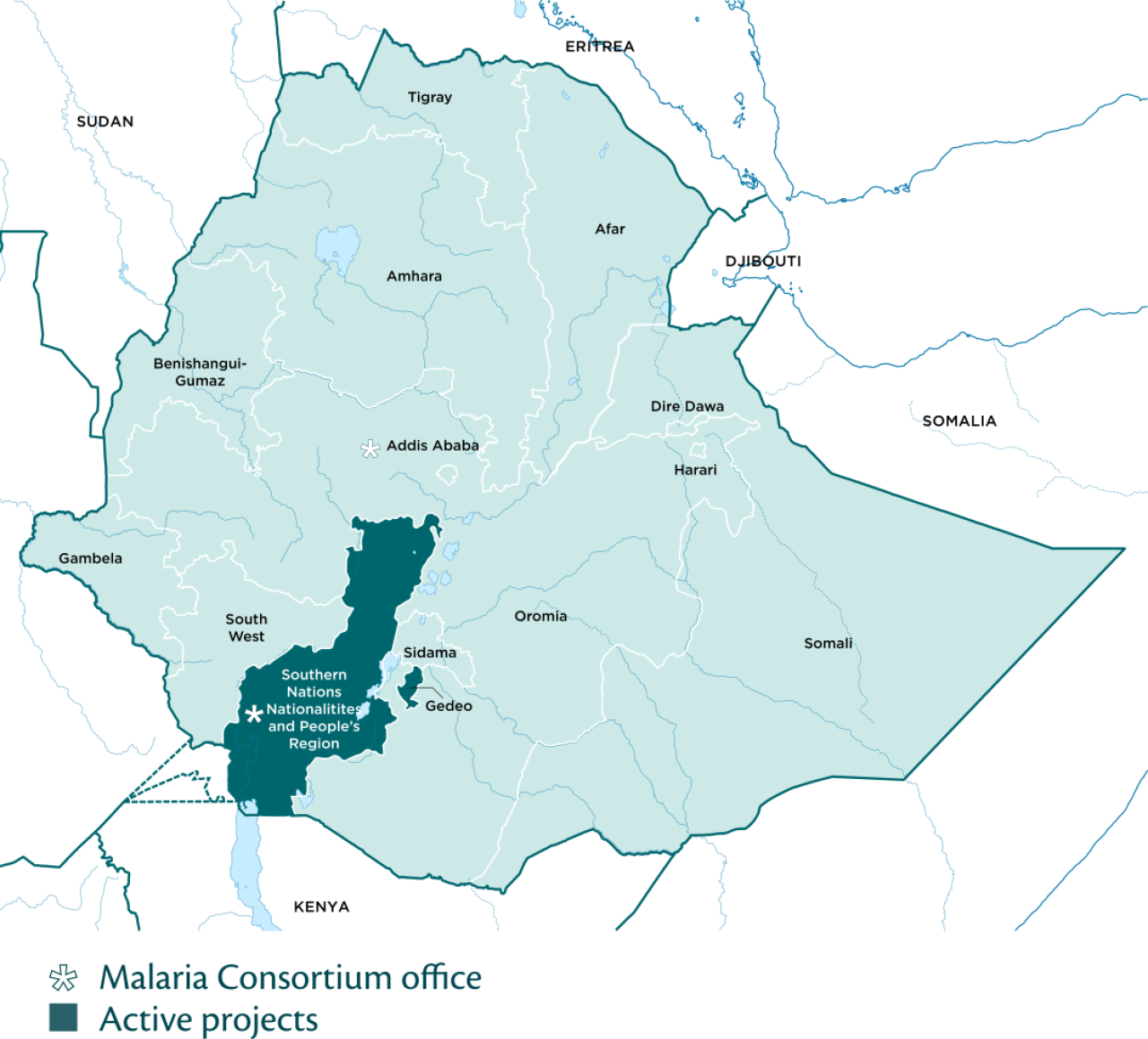
▶ Malaria Consortium has been implementing projects in Ethiopia since 2004 from our offices in Addis Ababa and Hawassa.
▶ We are supporting malaria surveillance and epidemic response in 18 districts. Between June 2024 and January 2025, malaria cases in these targeted districts fell by 29 percent.
▶ We have pioneered digital health solutions to tackle pneumonia, introducing automated respiratory rate counting aids and investigating how AI could improve diagnosis for children under five.
▶ We have advanced integration of NTD interventions into primary healthcare, supporting the national NTD Master Plan.


