

Realising the power of partnerships to advance malaria elimination and health security in Ethiopia
Approx reading time:
Professor Wilfred Mbacham, chair of Malaria Consortium’s Board of Trustees, recently visited Ethiopia, to strengthen partnerships and to celebrate the country's hard-won gains against malaria.
In March 2026, Malaria Consortium Ethiopia hosted a visit by Professor Wilfred Mbacham, chair of Malaria Consortium’s Board of Trustees.
Professor Mbacham had the opportunity to meet with the zonal, district and health facilities partners working to improve public health outcomes in Sodo zuria district, Wolaita zone in Ethiopia. Engagements with key partners in Addis Ababa, including the Africa Centres for Disease Control and Prevention (Africa CDC), US Government Foreign Assistance Council and the Health, Development, and Anti-Malaria Association, underscored Malaria Consortium’s commitment to optimising the impact of regional and national partnerships and advancing locally led efforts to end malaria and other health issues.
As the African Union’s public health agency, Africa CDC plays a central role in strengthening health security, advancing coordination and supporting countries to respond to current and emerging health threats. Professor Mbacham met with Africa CDC’s Director General, HE Dr Jean Kaseya and Deputy Director General, Dr Raji Tajudeen to discuss the importance of aligning efforts on key priorities, including preparing for antimicrobial and antimalarial drug resistance, sustainable health financing and the integration of malaria into pandemic preparedness frameworks. The discussions also focused on how partnerships can better support countries to deliver equitable, resilient and responsive health systems, a shared priority for both Malaria Consortium and Africa CDC. They highlighted opportunities for deepened collaboration, including advancing local manufacturing capacity, scaling up evidence-based interventions and investment in effective surveillance and advanced analytics systems to better anticipate, prevent and respond to disease threats.
“The current malaria upsurge in Ethiopia, reversing the remarkable gain in malaria prevention and control over the last two decades, and the negative change in the global funding landscape can only be addressed through strong collaboration of different partners and the role of Africa CDC in coordinating such collaboration is indispensable,” says Dr Agonafer Tarekegne, Country Director of Malaria Consortium Ethiopia.
“Malaria Consortium is committed to strengthening its collaboration with Africa CDC to advance progress towards malaria elimination, building on the public health mandate entrusted to Africa CDC by the African Union,” says James Tibenderana, Chief Executive of Malaria Consortium. “We recognise the evolving global health governance landscape and our responsibility to foster new partnerships that support shifting power dynamics and strengthen national health security.”
Professor Mbacham’s visit also included discussions with the Foreign Assistance counsellor, the health unit director and technical advisors from the United States Embassy on evolving global health financing structures and the increasing emphasis on funding mechanisms that channel resources through national governments. These shifts highlight the growing importance of locally led delivery models and partnerships that facilitate national ownership and align to national priorities in an evolving funding and geopolitical landscape.
This is particularly critical in Ethiopia, where significant progress in reducing malaria cases and deaths between 2016 and 2019 has been followed by a recent resurgence in its malaria burden. A variety of environmental, biological and human factors have contributed to the current upsurge, including climate change, insecticide resistance, emergence of invasive mosquito species, Anopheles stephensi in urban settings, weakened surveillance, health service disruptions, internally displaced populations, armed conflict and new development corridors, putting more than 75 million people at risk across the country.
Against this backdrop, strengthening primary health care and community-based delivery systems and ensuring sustained access to prevention, diagnosis and treatment services remain essential to protecting gains and accelerating progress towards malaria elimination. Ethiopia’s experience reflects a broader regional need to enhance early warning systems, preparedness for arboviral diseases and epidemics, and coordinated action to address drug and insecticide resistance.
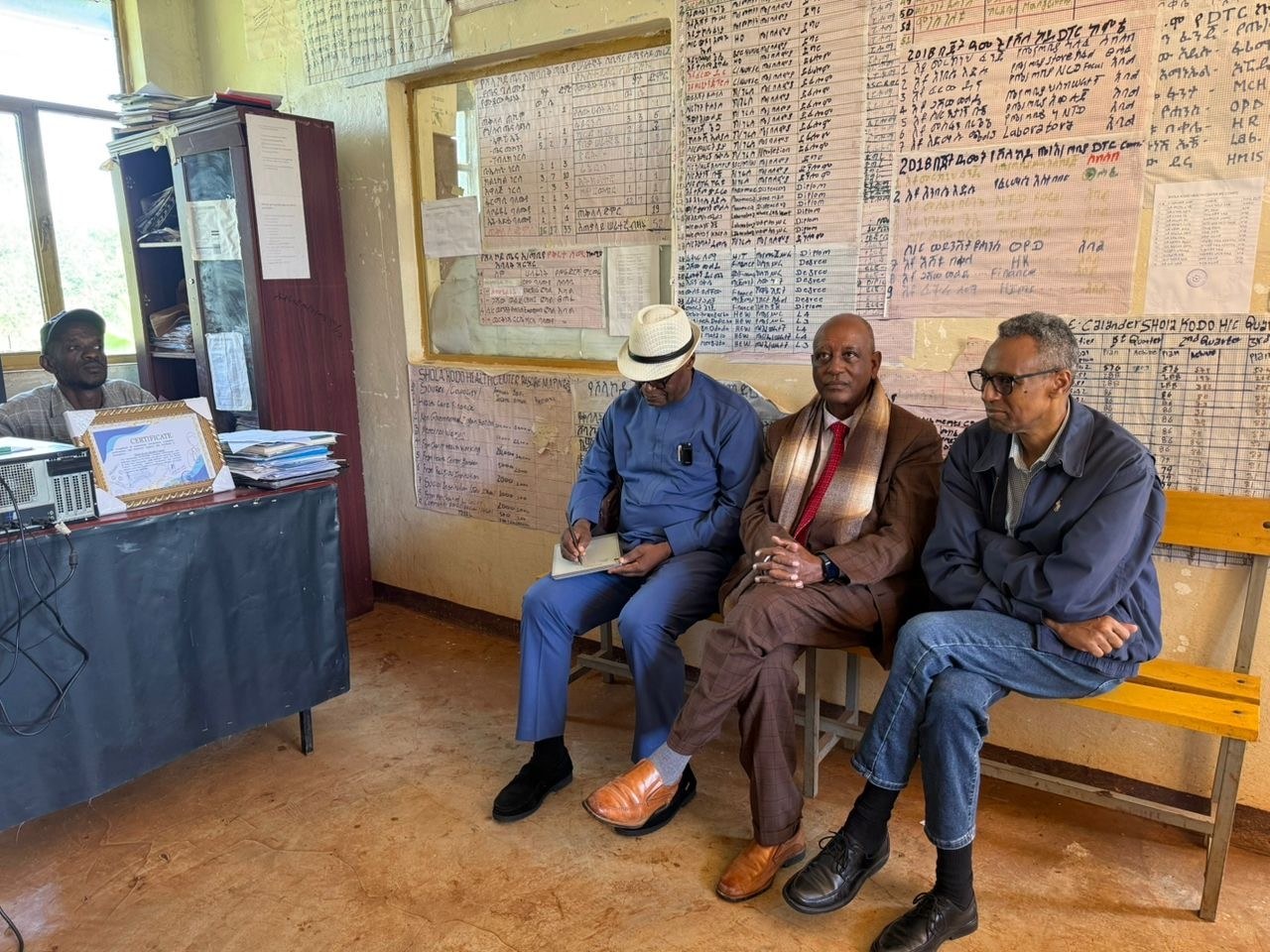
Professor Mbacham had the opportunity to visit several Malaria Consortium project sites across the country, including the seasonal mobile workers, SENNAY project, the Accelerating Burden Reduction towards Malaria Elimination project and the Happy Feet project, observing how integrated, community-led approaches are helping to reach underserved populations and improve health outcomes.
The visit provided a valuable opportunity to align efforts between national governments, regional bodies and implementing partners to sustain the impact we have collectively achieved and strengthen readiness for threats to progress on the horizon.