

In Burkina Faso, communicable diseases such as malaria are a leading cause of illness and death — especially among children under five. This is despite increased government investment in healthcare. Malaria Consortium partners with the Ministry of Health and local stakeholders to deliver targeted interventions, such as seasonal malaria chemoprevention (SMC).
Alongside our SMC work, we support social and behaviour change interventions, implementation science and the use of digital solutions to enhance health systems.
Access to healthcare in Burkina Faso has been made difficult by insecurity following a coup in 2022, with over 400 health facilities not functional as of December 2023. This has led to many internally displaced persons. However, by strengthening campaign planning, community engagement and evidence-based decision-making, we are helping to protect the country’s most at-risk communities.
Burkina Faso at a glance
▶ Malaria in Burkina Faso is highly endemic; there were over eight million cases recorded in 2023, out of a population of around 23 million.
▶ Among these, there were over 16,000 deaths reported — that’s nearly three percent of global malaria deaths.
▶ Malaria is seasonal, with around 60 percent of cases occurring between June and October.
Our impact
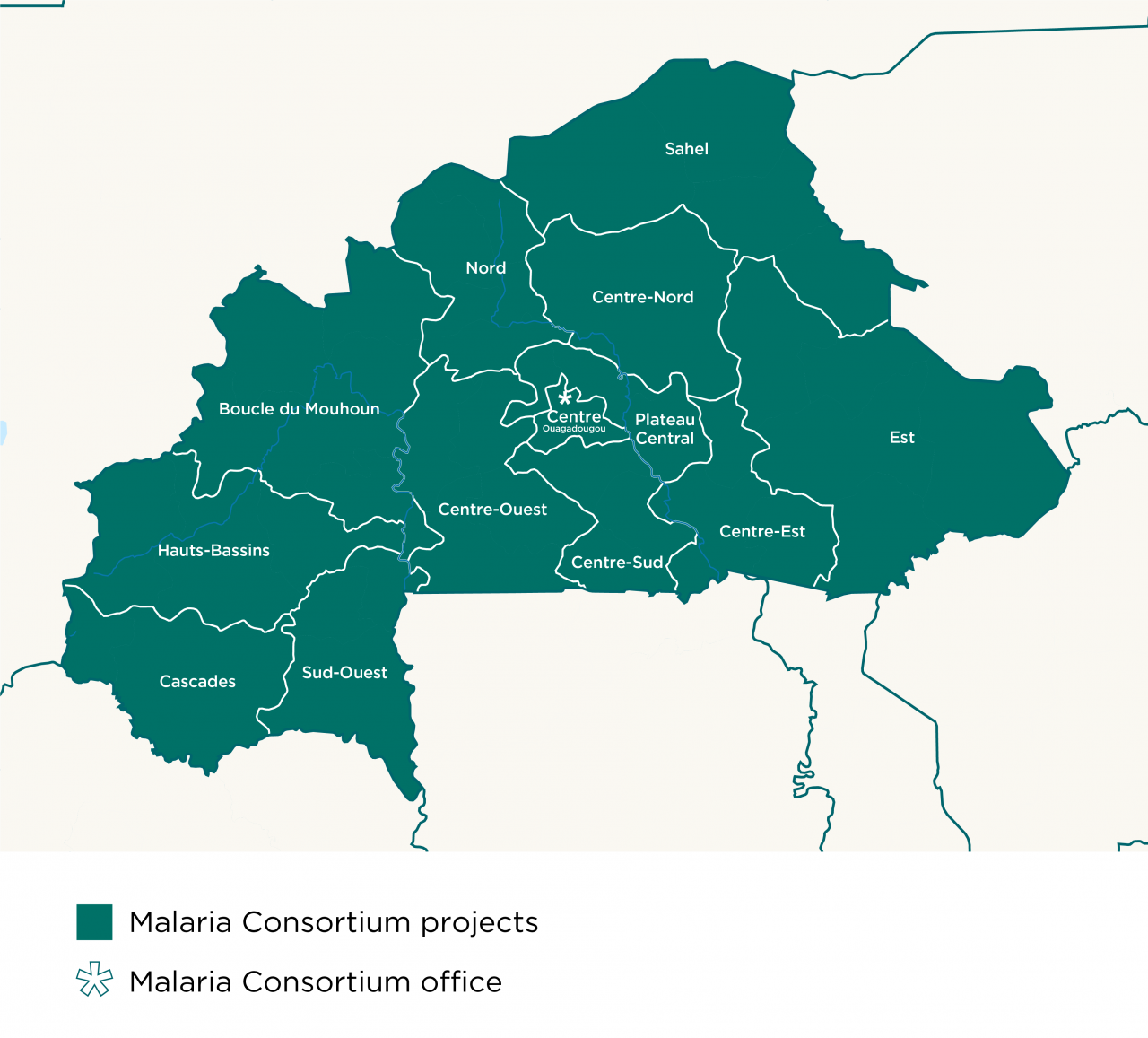
▶ Malaria Consortium established an office in Ouagadougou, the capital of Burkina Faso, in December 2014.
▶ Since 2019, Burkina Faso has reached all 70 of its health districts with SMC, with support from Malaria Consortium and others.
▶ In 2024, SMC community distributors destroyed more than 360,000 mosquito breeding sites in health districts supported by Malaria Consortium.
▶ Around 2,700 radio spots and 80 television broadcasts about SMC were aired in these districts before the start of the 2024 SMC campaign.


