
Accelerating burden reduction towards malaria elimination
This project is supporting Ethiopia’s Ministry of Health (MOH) to maintain progress towards malaria elimination by demonstrating a model for accelerating burden reduction in low and moderate-burden districts affected by the 2024 malaria upsurge.
Objectives
- Strengthen surveillance systems to enable targeted, evidence-based malaria responses
- Improve the quality and availability of malaria case management, prioritising Plasmodium falciparum infections
- Support improved implementation and monitoring of vector control interventions, including indoor residual spraying and larval source management
- Increase community ownership and engagement in malaria prevention and response
- Generate and share evidence and learning to support scale-up and inform national malaria policy and strategy development.
Anticipated outcomes and impact
Acceleration of progress towards malaria elimination in low- and medium-burden districts. The project’s primary outcome is a significant reduction in the malaria annual parasite incidence in the project districts, moving them from moderate–high levels to low levels of malaria and ultimately reducing morbidity and mortality from malaria.
Strengthened health system capacity at all levels. Training, mentorship and supervision of health workers will enhance malaria surveillance and data-informed decision-making, as well as improve access to high-quality malaria case management. Malaria Consortium is also working with health staff at district and national levels to strengthen planning and monitoring of vector control measures.
Community ownership and awareness. Engaging at-risk communities and deepening their understanding of the measures needed to prevent and treat malaria will drive demand for quality care and ensure that progress is sustained and scaled over the longer term.
Background
Ethiopia made significant progress in reducing cases and deaths from malaria between 2017 and 2019, with the National Strategic Plan 2024/25–2026/27 setting out clear goals for the shift from a control-focused to an elimination-focused programme. However, ongoing resource limitations, changing climate and transmission patterns, and a major malaria outbreak in 2024 have set the country back in its elimination journey.[1] Funding cuts have disrupted programmes aiming to eliminate malaria in the lowest burden districts. Gaps in surveillance systems and malaria service delivery further add to the complexity of achieving malaria elimination.
Malaria Consortium has been supporting the Ethiopian government with an emergency response in 18 high-burden districts of South Ethiopia. As well as providing community engagement, integrated malaria surveillance, epidemic detection and response, Malaria Consortium is advocating for greater outbreak preparedness at all levels of the health system.[2] Between June 2024 and January 2025 malaria cases fell by 29 percent and hospital admissions due to malaria fell by 68 percent in these 18 districts.[3] However, challenges remain in timely detection and response, quality of treatment and sustained community engagement.


Project outline
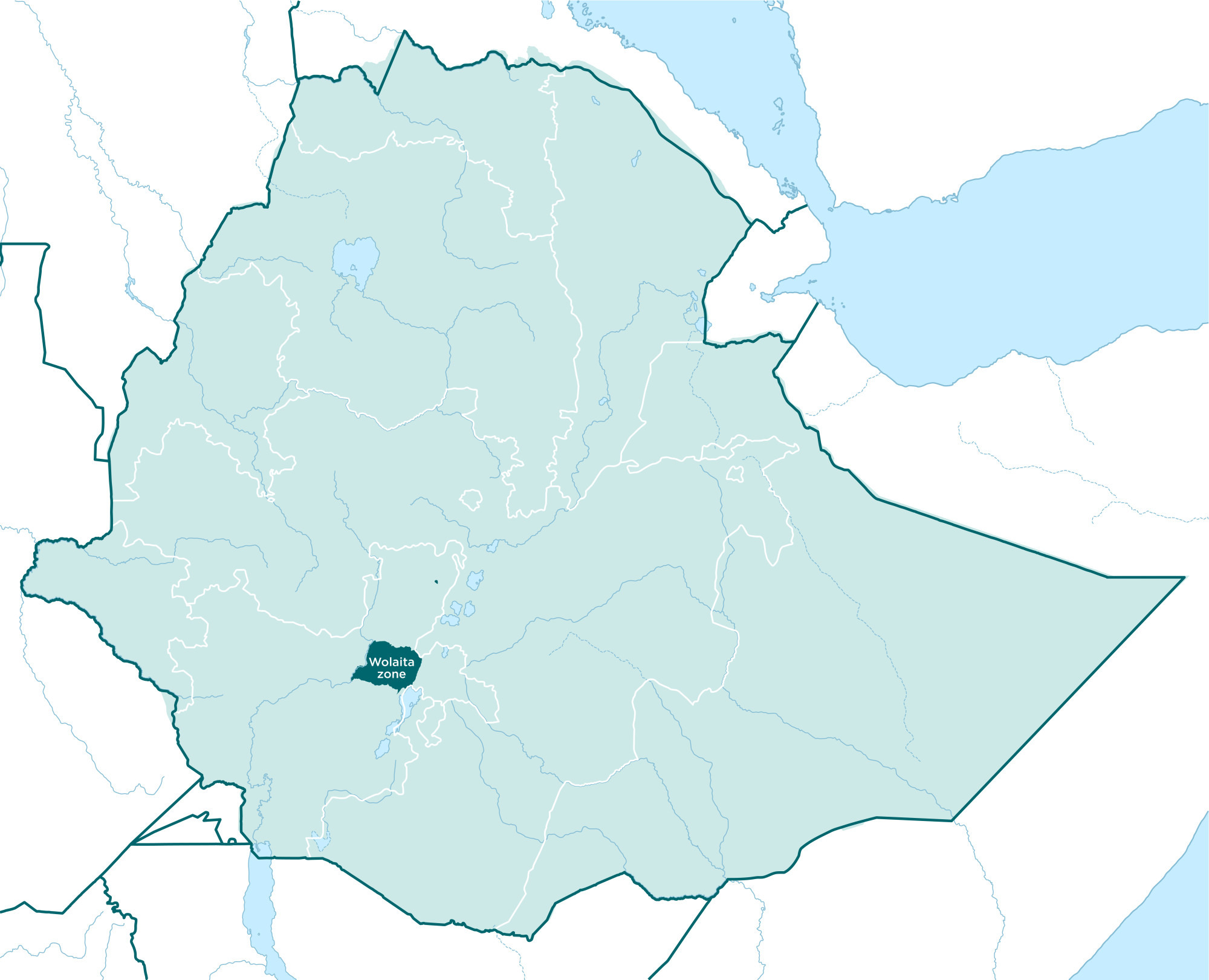
Malaria Consortium seeks to address persistent gaps in malaria control to accelerate the elimination of Plasmodium falciparum malaria in four districts that were previously classified as having low to moderate transmission but have experienced a significant increase in cases. In close collaboration with the Ministry of Health and local health authorities, Malaria Consortium will focus on strengthening surveillance, improving case management, enhancing vector control and empowering communities in Damot Gale, Damot Pulasa, Damot Woide and Duguna Fango districts in Wolayita zone, South Ethiopia.
This activity aims to build a replicable model that can inform national efforts. The project aligns with and builds upon ongoing national and partner-led malaria initiatives, complementing efforts under the National Malaria Strategic Plan and partner-supported surveillance and vector control activities.
Activities
The project team will strengthen surveillance by training health workers and officials at all levels to improve data quality, analysis and response planning.
Malaria case management will be enhanced through ongoing training, mentorship and supportive supervision, alongside audits and improved coordination between community and facility-based providers.
In support of vector control, Malaria Consortium will work with the Ministry of Health to improve the planning and monitoring of indoor residual spraying and demonstrate effective waste and equipment management.
Community awareness of malaria prevention and response will be fostered through participation in school clubs, local groups and tailored social and behaviour change communication campaigns based on behavioural research.
Routine data reviews and adaptive management processes will contribute evidence and high-impact practices to inform national malaria strategies and potential scale-up.
References
1. World Health Organization (WHO). Disease outbreak news; malaria in Ethiopia. WHO; 31 October 2024.
2. Malaria Consortium. Malaria emergency response in South Ethiopia. Project brief. Malaria Consortium; 2025.
3. Malaria Consortium. Impact report 2025. Malaria Consortium; 2025.
Countries

