

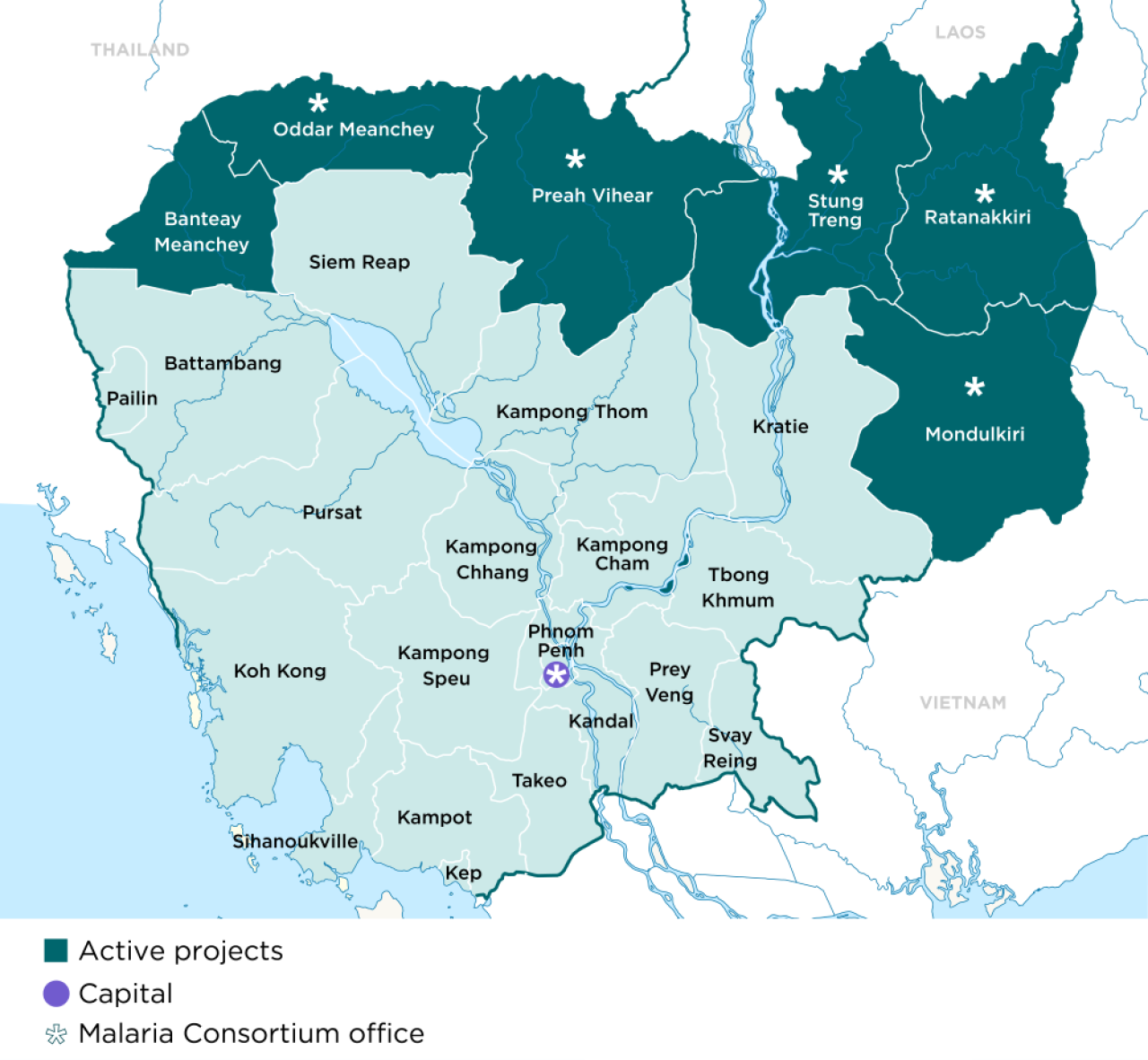
In Cambodia, malaria elimination is within reach. However, challenges persist due to issues such as drug resistance and difficulties reaching remote and mobile populations. Malaria Consortium works closely with the Ministry of Health as the National Center for Parasitology, Entomology and Malaria Control, the National Immunisation Programme, and the Preventive Medicine Department.
The country is on track towards achieving malaria-free status, as certified by the World Health Organization, by 2029. Our work supporting Cambodia’s national malaria elimination strategy involves promoting knowledge sharing among national and provincial health staff, enhancing surveillance systems and delivering tailored interventions to remote, mobile and hard-to-reach communities.
Drawing on a strong community engagement approach, we have worked with communities to increase equitable access to health services for malaria, dengue, and cervical cancer screening and treatment.
Cambodia at a glance
▶ Over 66,000 malaria cases reported in 2018 amid rising artemisinin resistance and funding constraints.
▶ Nationwide malaria elimination efforts launched in November 2020 through the Intensification Plan and 'last mile' activities.
▶ In 2024, just 59 malaria cases reported — an 83 percent decrease from the same period in 2023.
▶ 1,500 women develop cervical cancer each year due to lack of access to health services. Only 20 percent of women at eligible aged screened for cervical cancer up to 2024.
Our impact
▶ Malaria Consortium has had a presence in Cambodia since 2003, and our main office in Phnom Penh opened in 2009.
▶ We were recognised in 2015 by the Ministry of Health with a certificate of merit for high performance in malaria elimination-focused implementation.
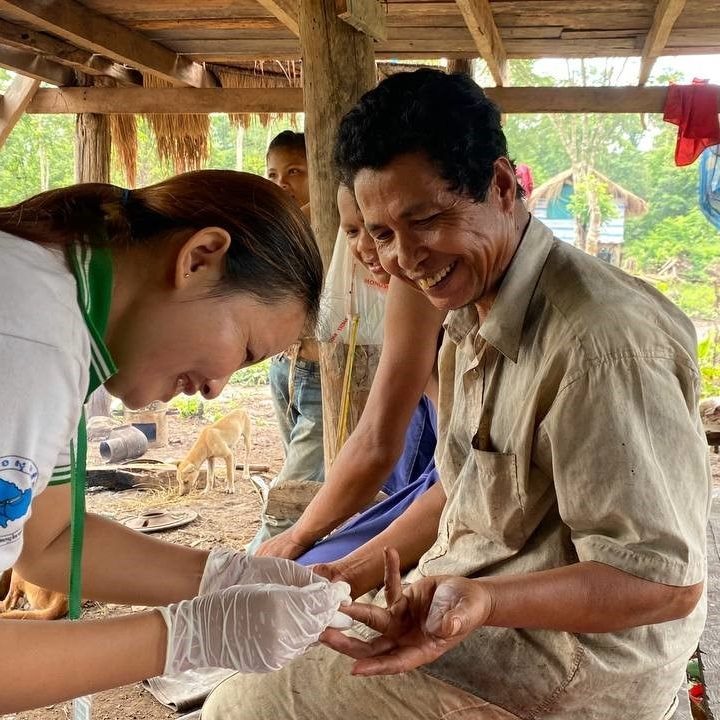
▶ We have strengthened surveillance systems, supported the training of village and mobile malaria workers, and helped document response activities to prevent malaria re-transmission.
▶ Our dengue programmes have enabled communities to implement sustainable vector control strategies, such as recycled mosquito traps and guppy fish nurseries.
▶ Since 2024, we launched projects supporting the national HPV vaccination programme and expanded cervical cancer screening and treatment services in rural health facilities.

Dr Huy Rekol
Director of the National Center for Parasitology, Entomology and Malaria
Throughout our collaboration with Malaria Consortium, this organisation has demonstrated not only a strong commitment to the elimination goal but also remarkable agility in mobilising resources and supporting strategic milestones, such as the Malaria Programmatic Review, which is critical at this stage of our certification journey. This ongoing support enables us to maintain highly effective surveillance and finalise our national malaria elimination strategy.


