
Building on the achievements and lessons from the Strategic Engagement from National level to Community Delivery (SEND) project, SEND 2 supports Uganda’s Ministry of Health and partners to strengthen integrated malaria vaccine delivery across nine high-burden districts in Karamoja.
This project aims increase uptake and integration of the R21 malaria vaccine into Uganda’s routine immunisation system, targeting zero-dose and under-immunised children across nine high-burden districts in Karamoja. The project addresses service delivery gaps following USAID’s withdrawal and supports national efforts to scale the malaria vaccine through a cohort-based, age-eligible approach.
Objectives
- Increase uptake and completion of malaria vaccine doses among children who are 6–23 months, as well as under-fives who are zero-dose (i.e. have not received any vaccinations), under-immunised or at risk of dropping out before completing the four-dose malaria vaccine schedule.
- Strengthen integration of malaria vaccination into routine childhood immunisation and community-based malaria prevention platforms.
- Improve community awareness, acceptance and demand for malaria vaccination.
- Generate operational learning on integrated malaria vaccine delivery models in mobile populations and those facing barriers to accessing health services.
Outcomes and impact
- Reduction in severe malaria and malaria-related deaths among under-fives in Karamoja. SEND 2 is expected to contribute to increased malaria vaccine uptake and completion among children under five in Karamoja, helping reduce rates of malaria in this group. By strengthening the delivery of integrated outreach and community-based follow-up systems, the project will improve the continuity of immunisation services for at-risk and previously underserved populations.
- Improved community trust in strengthened healthcare services. The project is strengthening coordination between
malaria and immunisation programmes at district and community levels, while reinforcing health worker capacity, data use and supportive supervision systems. Communities are expected to benefit from improved access to integrated child health services, stronger awareness of malaria prevention and increased confidence in routine immunisation services. - Evidence to advocate for integrated approaches to malaria prevention for underserved populations. SEND 2 is
contributing to national learning on integrated malaria vaccine delivery and providing evidence to support future policy and programme decisions on scaling integrated malaria prevention approaches. The project’s operational experience in Karamoja will inform strategies for reaching mobile and underserved populations in other high-burden settings.
Initial results (August 2025 to March 2026)
- In the first nine months of project implementation, the following numbers of children have been reached with malaria vaccine:
Dose 1: 43,940 children reached
Dose 2: 36,352 children reached
Dose 3: 28,467 children reached
Dose 4: 6,084 children reached - 30,299 zero dose children have been reached with malaria vaccine.
- An early challenge has been 35 percent dropout between malaria vaccine doses 1 and 3. Children who do not receive at least three malaria vaccine doses will not be protected against severe malaria, hospitalisation and death from malaria.
Background
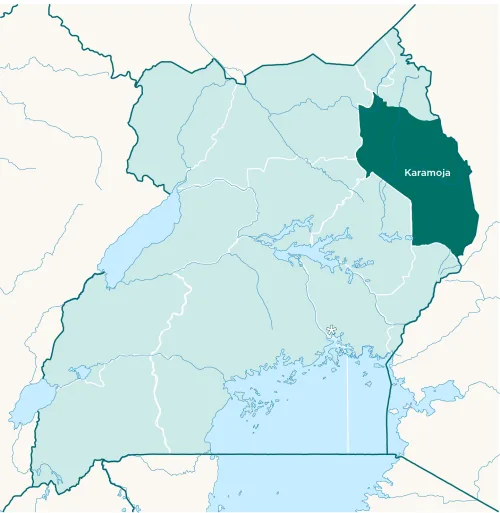
Malaria remains one of the leading causes of illness and death among children under five in Uganda, with the burden disproportionately affecting communities in areas where health services are not well established.[1,2] The nomadic pastoralist communities of the Karamoja sub-region continue to experience some of the highest malaria prevalence rates in the country, driven by seasonal transmission, limited access to health services and persistent barriers to immunisation uptake.
Despite progress in malaria prevention and treatment through insecticide-treated nets (ITNs), seasonal malaria chemoprevention (SMC) and improved case management, many children remain under-immunised or entirely unreached by
routine vaccination services. The introduction of the R21 malaria vaccine into Uganda’s routine immunisation programme presented a major opportunity to reduce severe malaria and malaria-related child mortality.[3] However, funding withdrawals created operational and service delivery gaps that threatened the continuity of outreach services, community mobilisation and follow-up systems needed to sustain vaccine uptake in high-burden districts.
Activities
The project team is supporting microplanning, data recording and cohort tracking to identify eligible children. Village health teams and health workers are conducting household mobilisation, reminder visits and follow-up of under-immunised and zero-dose children before and during outreach sessions.
Outreach teams are integrating malaria vaccination delivery with routine immunisations, vitamin A supplementation, deworming and malaria prevention counselling during community outreach sessions. Mobile outreach approaches are being used to reach pastoralist and hard-to-reach populations.[5]
Culturally appropriate social and behaviour change communication activities are being used to address misinformation, reinforce vaccine confidence and promote completion of all malaria vaccine doses.
Health worker mentorship, supportive supervision and data review processes are in place to improve service quality, reporting and programme coordination. District malaria vaccine taskforces are reviewing uptake, operational bottlenecks and community feedback to strengthen adaptive programme management.
References
- World Health Organization (WHO). World Malaria Report 2025. WHO; 2025.
- Uganda Ministry of Health (MoH). Uganda Malaria Indicator Survey 2022–2023. MoH; 2023.
- Uganda Bureau of Statistics (UBOS), ICF. Uganda Demographic and Health Survey 2022. UBOS, ICF; 2023.
- Malaria Consortium. SEND — Malaria Vaccine: Strategic engagement from national level to community delivery. Project brief. Malaria Consortium; 2025.
- Malaria Consortium. Taking a supermarket approach to healthcare integration in remote districts: Experiences from Uganda. Case study. Malaria Consortium; 2025.
This project aims increase uptake and integration of the R21 malaria vaccine into Uganda’s routine immunisation system, targeting zero-dose and under-immunised children across nine high-burden districts in Karamoja. The project addresses service delivery gaps following USAID’s withdrawal and supports national efforts to scale the malaria vaccine through a cohort-based, age-eligible approach.
Start date
01/08/2025
End date
01/08/2027
Country/
Countries
Countries
Africa >
Uganda
Funder
Malaria Consortium US
Funding
850,000 USD
Partners
Ministry of Health Uganda; UN Essential Programme on Immunisation; National Malaria Elimination Division (NMED);