Reaching the unreached: A South-South exchange for malaria elimination
by Asia Pacific Malaria Elimination Network (APMEN)
Approx reading time:
From 9 to 13 February 2026, malaria programme leaders from Indonesia, Papua New Guinea, Solomon Islands, Timor-Leste and Vanuatu travelled to Cambodia for the APMEN Melanesian Countries’ Learning Visit hosted by Malaria Consortium and guided by the National Centre For Parasitology, Entomology and Malaria Control (CNM).
Their goal was to learn first-hand from a country that has recorded no local malaria transmission since January 2026. After a day of national-level presentations in Phnom Penh, the delegation boarded minivans for Stung Treng province, Cambodia's most remote region bordering with Lao PDR and, until recently, its last malaria stronghold. What followed over the next three days offered lessons that no conference room could replicate.
On the road to Stung Treng
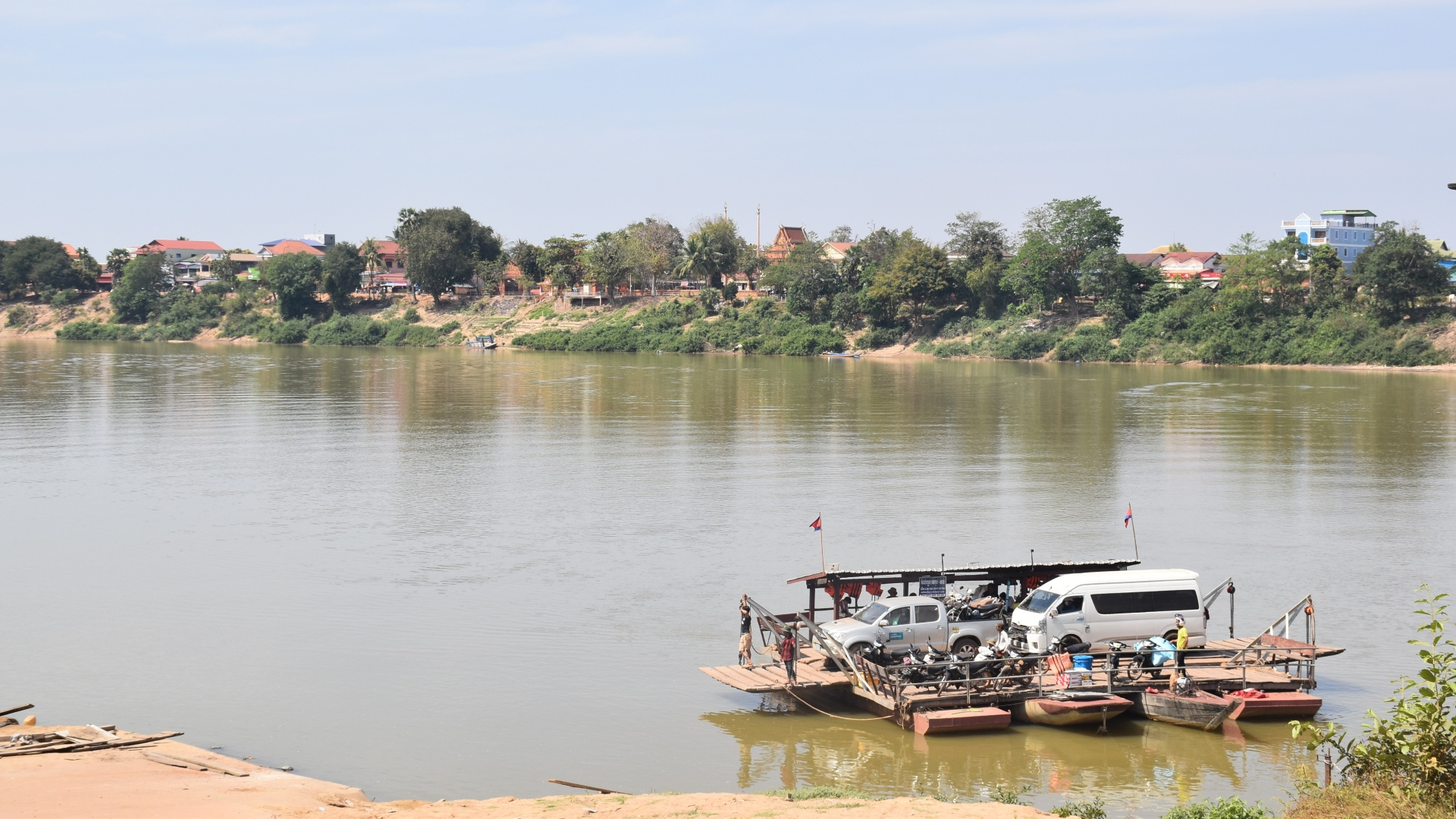
Our journey into Stung Treng province began with seven hours on the road, crossing rural villages, dusty roads and rivers that define this remote corner of Cambodia. The rugged terrain quickly revealed why malaria elimination efforts here require extraordinary dedication — motorbikes, ferry boats and long treks are simply part of daily work for frontline teams.
Visiting village malaria workers in Kirivongsa Leu offered a first-hand glimpse into their world: simple homes stocked with malaria rapid diagnostic tests (RDTs), long-lasting insecticidal nets, repellents, chloroquine and hand-written logbooks that quietly document the province's progress towards zero malaria. Riding through the village paths to reach their posts underscored just how far they go — literally — to serve their communities, testing forest goers, carrying supplies and offering treatment in places where health services cannot easily reach.
Their stories of moving from village to village on motorbikes at night during the 60-day mass drug administration (MDA) campaign highlighted both the challenges and the unwavering commitment that led to the remarkable achievement of zero malaria cases since September 2025. With most families relying on nearby streams for water and living within dense vegetation, the work of village malaria workers remains vital in bridging the gap between the health system and hard-to-reach populations.
At each village malaria worker post, the delegation learned that these volunteers carry out far more than malaria testing. They distribute nets to households, with an additional hammock net provided for every family member who regularly enters the forest. For forest goers, one personal net is provided per individual rather than per household, recognising the specific risk they carry. Chloroquine is handed out as prophylaxis to those heading into forested areas. Medication is free to all villagers, funded through the Global Fund and the Central Government. People volunteer as village malaria workers, the delegation was told, simply because they want to help their communities.
Mobile malaria workers: Taking the programme to the forest edge
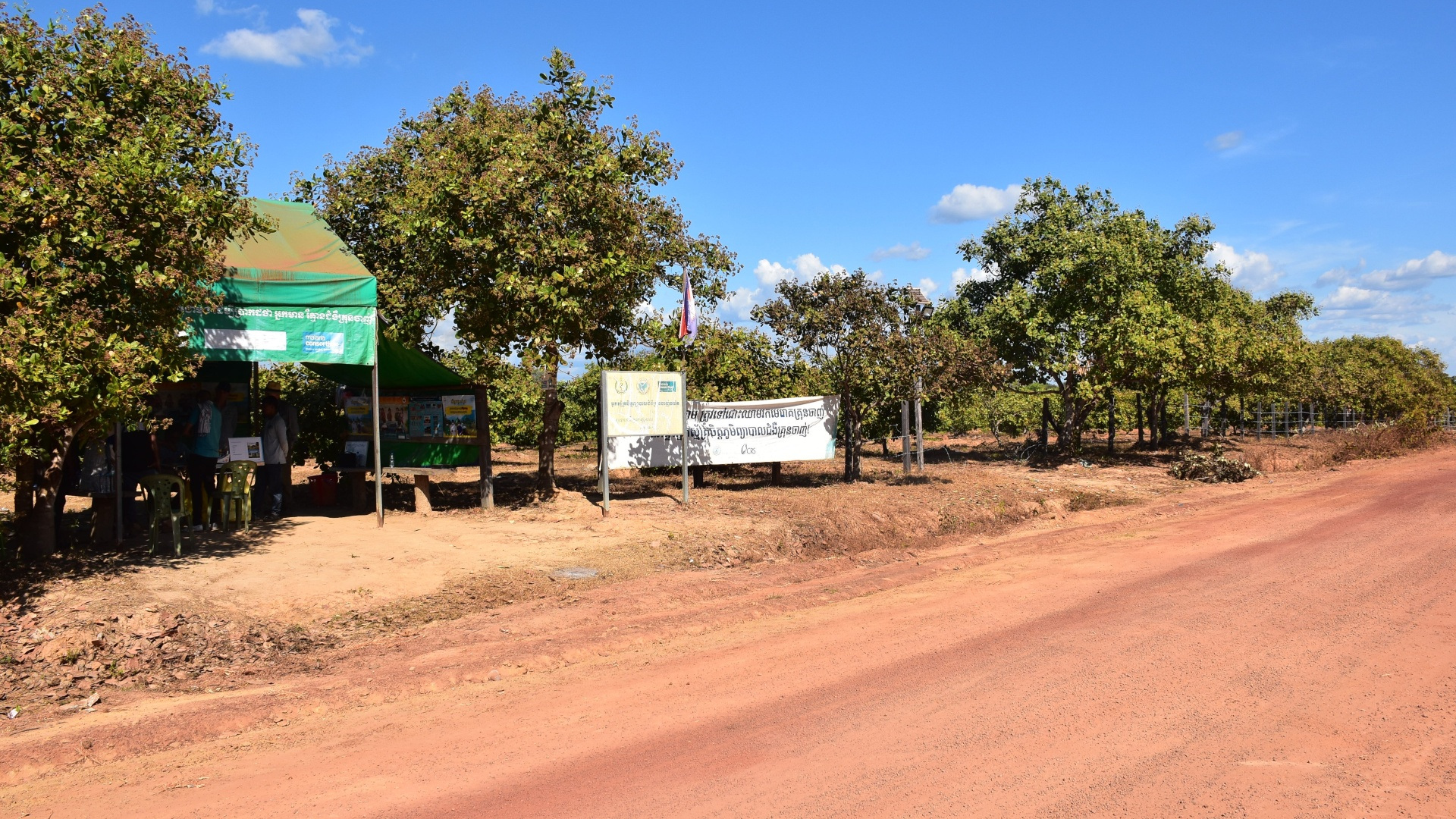
The visit to the mobile malaria workers' post in Cham village further illustrated how outreach must adapt to the movement of people entering and exiting forested zones. Unlike village malaria workers, mobile malaria workers operate at mobile posts, often relocating based on malaria information system (MIS) data and the shifting patterns of forest activities — sometimes working alone for days to ensure continuous coverage. Observing their malaria testing procedures amidst such remote surroundings made clear how essential their presence is in identifying and treating Plasmodium vivax cases, which were most common here in 2025.
Malaria Consortium implements around 25 of these mobile posts across four provinces, each positioned at entry and exit points to forests where the bulk of at-risk movement occurs. Each post is staffed by two mobile malaria workers who rotate to ensure at least one person is present every day.
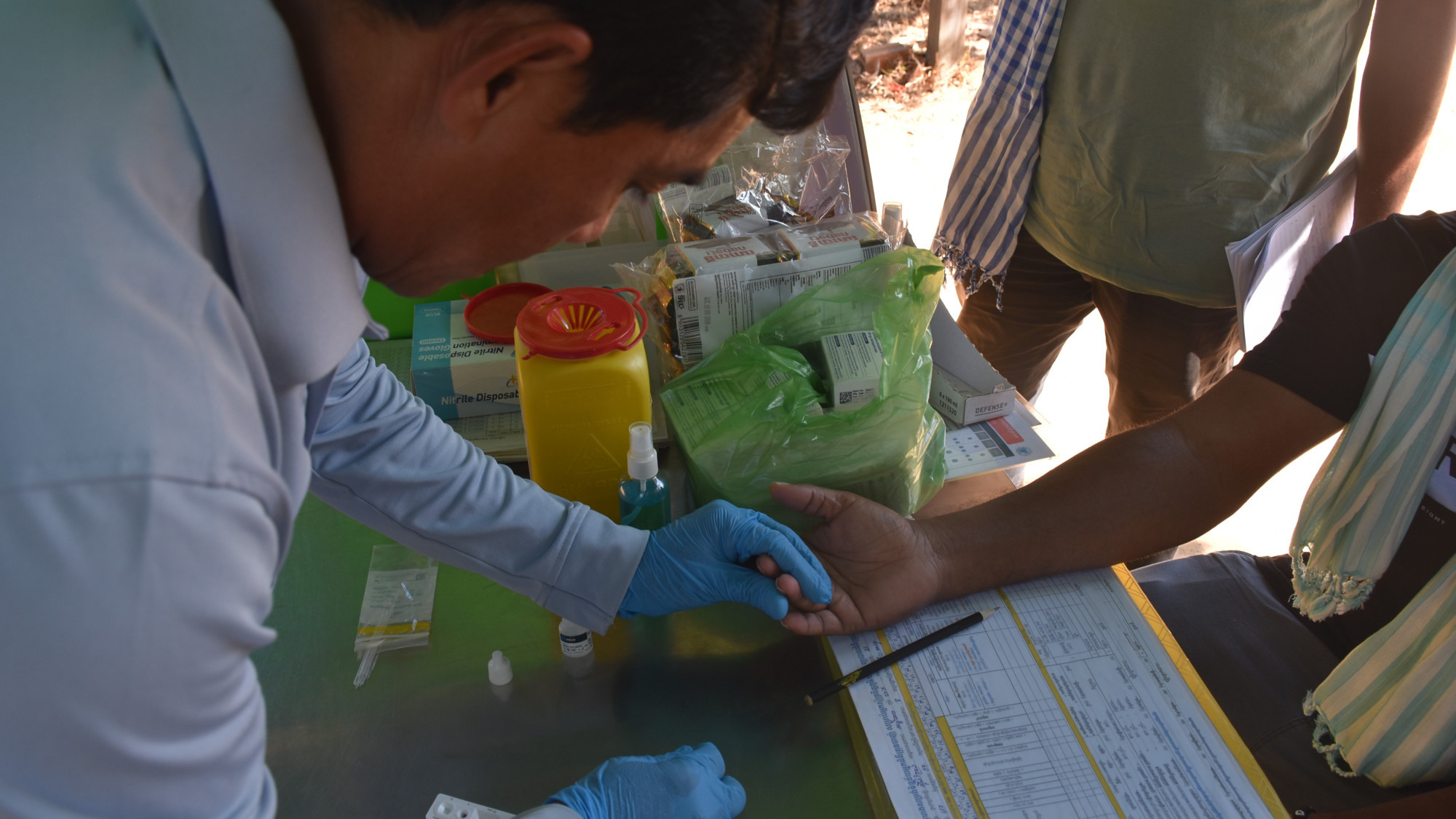
The Cham village post carried a particular distinction: it recorded more Plasmodium vivax cases than any other location in Cambodia in 2025, and also played a central role in the 60-day MDA campaign that helped push the province to zero. The delegation watched a full RDT demonstration and had ample opportunity to ask questions, many shaped by the parallel challenges they face in their own forest-fringed communities back home.
Connecting the last mile to the health system
Our travel to Siem Pang Health Centre the following day provided a broader picture of how village and mobile malaria workers link directly to the formal health system, supported by routine training, stock replenishment and strict reporting through the Malaria Indicator Survey. Riding along rural roads and meeting health staff showed how closely integrated these community workers are in surveillance, referrals and follow-up care, especially for complex Plasmodium vivax treatment involving G6PD testing.
The health centre, built in 1985, covers 11 villages and a combined population of over 12,000 people. Its 12 village malaria workers in the field are each supplied with 100 RDTs and a full stock of medication every month. The case trajectory recorded here told the story of Cambodia’s elimination effort in numbers: 60 P. falciparum cases in 2021, falling to just two in 2023, and zero in 2024 and 2025.
When the delegation asked what single intervention made the biggest difference, the health centre chief's answer was frank: there is no single answer. It is good communication between national and local levels, coordination among partners, constant refresher training for village and mobile malaria workers, and the relentless push to test as many people as possible.
A second village malaria worker's visit in Ban Huoy Village reinforced this. A roadside signboard reading ‘free testing and treatment’ marked the post. The single village malaria worker serving 371 people across three local languages is active roughly 25 days a month, balancing malaria duties with rice farming. He also assist with tuberculosis surveillance and general fever cases as part of the Village Health Supporting Group. His village has no mains electricity and draws water directly from the river. Yet through the national Malaria Indicator Survey, every case he records feeds into a real-time system that connects him to the provincial health department and beyond.
A region inspired, a network strengthened
From villages to forest posts to health centres, one message was clear: malaria elimination is possible only because of the people who work tirelessly to reach every person at risk. The Melanesian delegation returned home with practical insights, but also with renewed conviction that elimination is within reach.
This is the kind of exchange Asia Pacific Malaria Elimination Network (APMEN) Vector Control Working Group was created to enable. Countries in the region learn best from each other — not from reports, but from seeing frontline volunteers in remote communities. APMEN was proud to bring 12 leaders from five Melanesian countries to Cambodia, in partnership with Malaria Consortium Cambodia and the CNM.
The value of South-South learning extends beyond a single visit. Relationships built between Melanesian managers and Cambodian experts, national strategists and village workers, strengthen the regional fight against malaria. As Dr Huy Rekol reminded the delegation, learning is never one-way: Cambodia gains as much from Melanesia’s challenges as Melanesia gains from Cambodia’s progress.
Malaria ignores borders, and the risk of re-establishment remains real. A region that shares evidence, builds capacity and moves together is the only durable answer. This Melanesia-Cambodia exchange exemplifies that commitment.
“What we witnessed in Stung Treng was proof of what becomes possible when a country commits fully to reaching every last person at risk. Cambodia's hard-won achievement is exactly what the Asia-Pacific region needs to accelerate its own path to elimination,” says Leo Braack, Co-chair, APMEN Vector Control Working Group and Senior Vector Control Specialist at Malaria Consortium. “APMEN initiated this learning visit because we believe the most powerful evidence travels best between peers.”
This blog was originally published on the APMEN website.