

In Nigeria, malaria remains one of the most pressing health challenges, accounting for 27 percent of cases worldwide. The problem is magnified by persistent gaps in general health data, which can limit the opportunity for evidence-based decision making.
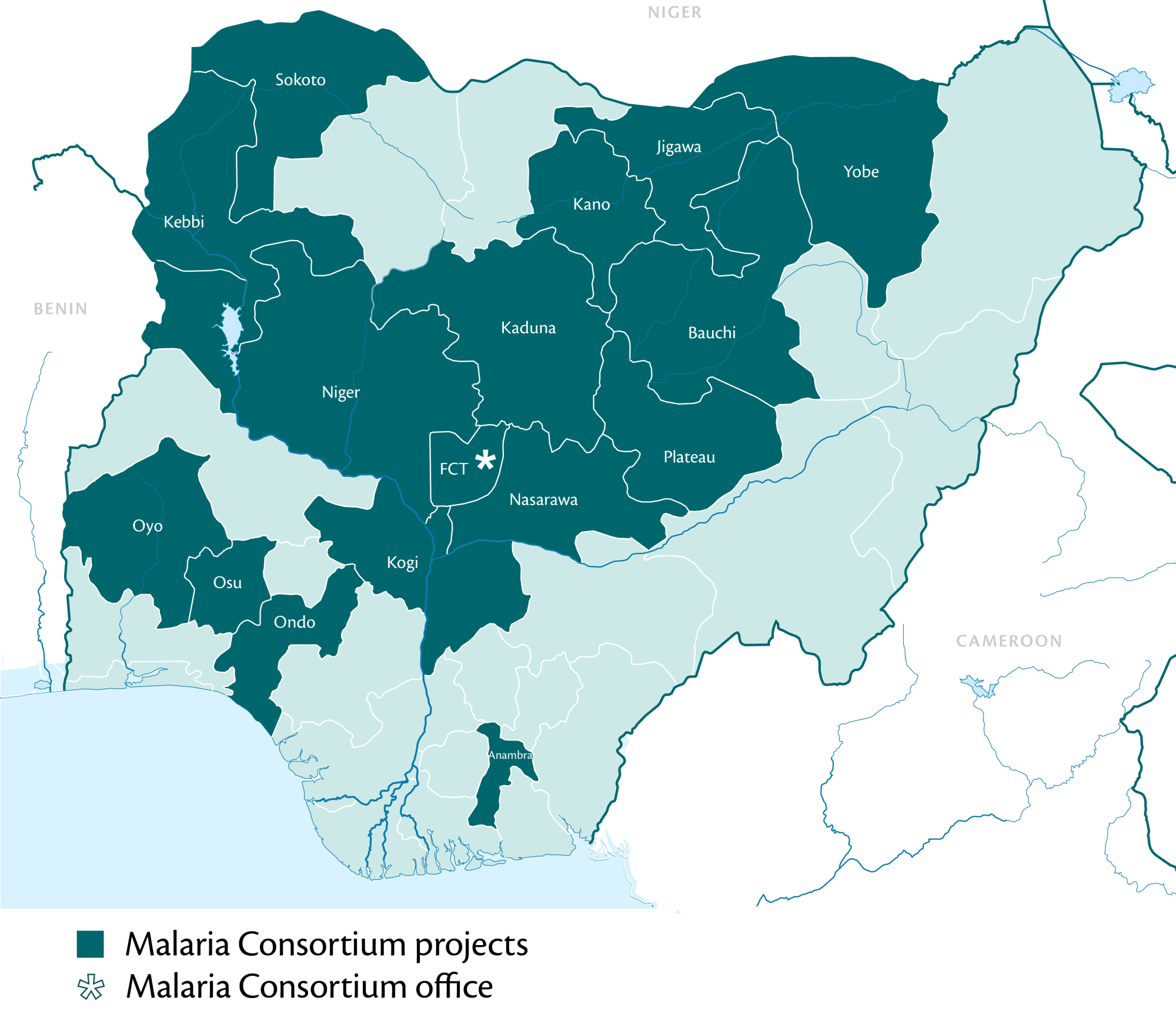
Since 2008, Malaria Consortium has partnered with the Ministry of Health and a range of national and international stakeholders to lead and support malaria control initiatives across Nigeria.
Our work has included delivering large-scale interventions such as seasonal malaria chemoprevention (SMC), long-lasting insecticidal net (LLIN) distribution, and supporting the rollout of a new malaria vaccine. By training local health workers, advancing digital health solutions and addressing barriers to care, we are improving access to prevention, diagnosis and treatment for malaria and associated health inequities.
Nigeria at a glance
▶ In 2023, Nigeria accounted for 40 percent of estimated malaria cases and 46 percent of estimated malaria deaths within the 10 'high burden to high impact' countries.
▶ Malaria is responsible for 30 percent of hospital admissions nationwide.
▶ Nigeria has begun rolling out the Oxford R21 malaria vaccine, starting with pilot programmes in Kebbi and Bayelsa states.
Our impact
▶ Malaria Consortium has been working in Nigeria since 2008 and has an office in Abuja.
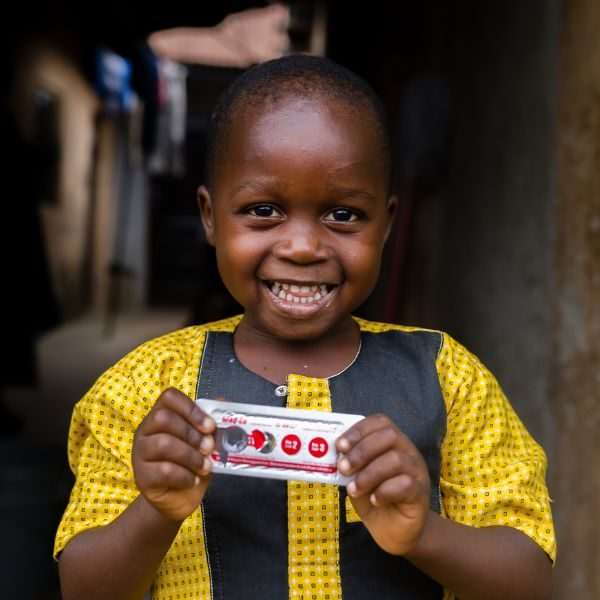
▶ We have supported the delivery of SMC to over 14 million children annually.
▶ Between December 2021 and August 2022, we distributed nearly 7 million insecticide-treated nets in Ondo and Anambra states, protected families and children from malaria.
▶ We are strengthening health systems by training health workers in malaria diagnosis, treatment and case management.
In 2015, Malaria and Public Health Nigeria (MPH-N) was established as the Nigerian entity of Malaria Consortium — sharing the mission to improve health and save lives in communities affected by malaria and associated health inequities.

