Mozambique

   Country Statistics

   Malaria Consortium in Mozambique

   Activities

   Projects currently undertaken in Mozambique

   Country Progress


Country Statistics

Population size (2009)

21.5 million

Life expectancy (2005)

42.8 years

Child Mortality (Deaths Before the Age of 5) (2007)

138 per 1,000 live births

Maternal Mortality (2005)

520 per 100,000 births

Percentage of HIV-positive adults (15-49) (2007)

16%

Percentage of households with ≥ 1 mosquito nets (2007)

55.2% any net

Percentage of Insecticide Treated Net Coverage (2006)

15.8%

Number of reported malaria cases (2007)

5,800,000 (annual mean)

Number of reported malaria deaths (2007)

3,366


Statistical data obtained from DESA, UNDP, UNICEF, UNAIDS and WHO


Malaria Consortium in Mozambique

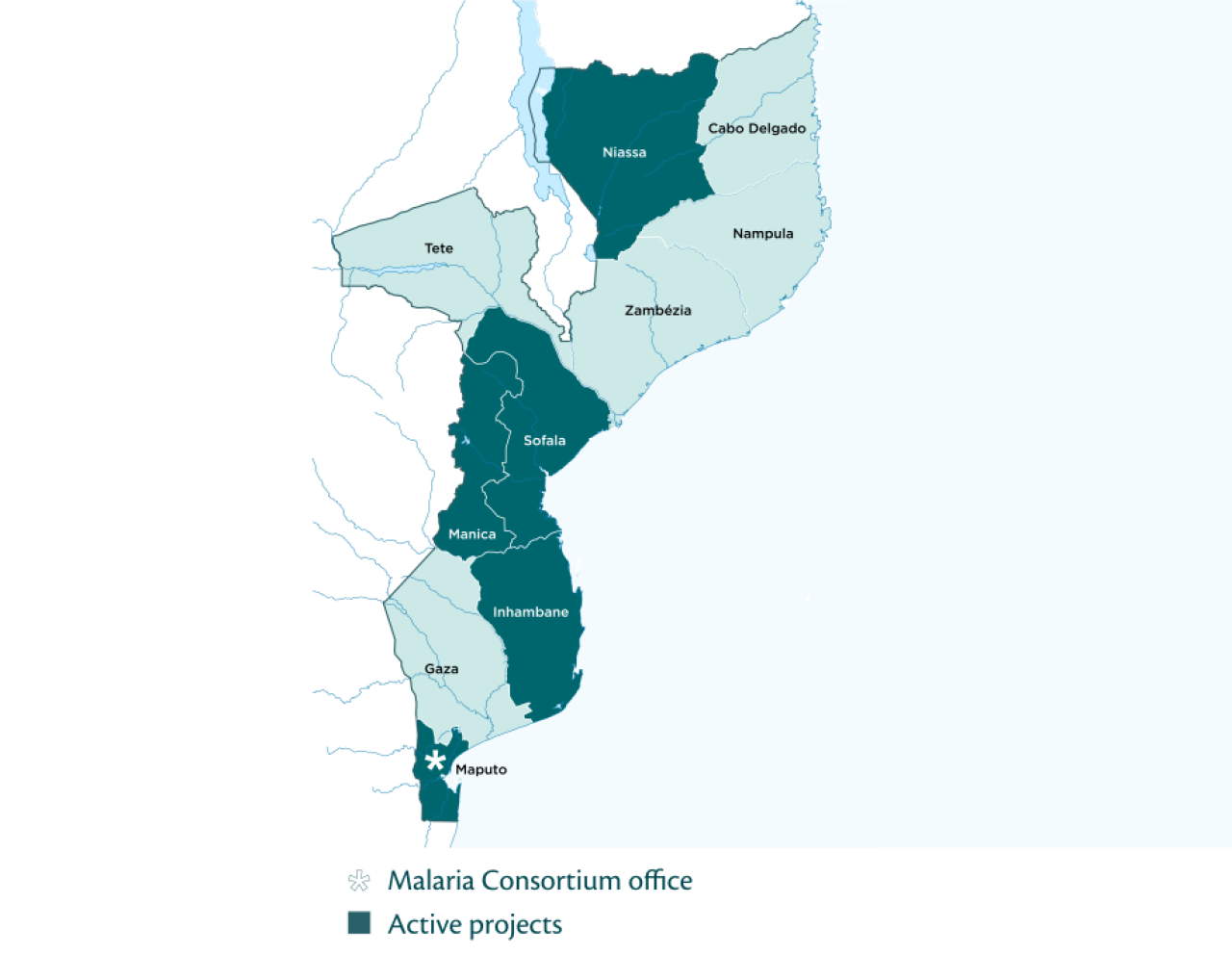
In Mozambique more children die of malaria than of any other disease. It accounts for over 60% of all paediatric admissions and 40% of all outpatient consultations and is responsible for 30% of all deaths registered in hospitals. In order to support the Ministry of Health at national and local levels to relieve the burden on the existing health services, Malaria Consortium has offices in the three country regions: two offices in the north (Nampula and Cabo Delgado); two offices in central Mozambique (Manica and Sofala); and two offices in the south (Inhambane and Maputo). Malaria Consortium is present in five of the country’s 11 provinces.

Malaria Consortium began operating in Maputo City and Inhambane province in late 2005, extending its reach to north, and central Mozambique in 2006 and 2008 respectively.

Working in collaboration with the Ministry of Health, Malaria Consortium, together with other partners, supports the National Malaria Control Programme (NMCP) and Provincial Health Authorities to roll out national policies and strategies in pursuit of the Millennium Development Goals.

At the central level, Malaria Consortium provides technical support for the development of key strategies, such as:

  • The Malaria Communication Strategy, which includes a database for information, education, and communication materials managed by NMCP
  • A health promotion strategy.
  • A Long-Lasting Insecticidal Net (LLIN) policy
  • The NMCP strategic, monitoring and evaluation plans
  • Malaria Consortium has also assisted in writing proposal submissions for the Global Fund.

At the provincial level, Malaria Consortium is focused on supporting health authorities to design and manage a distribution system delivering nets to pregnant women as part of ante-natal care services. There is now a well established anti-natal net distribution system in five provinces. In two of these the organisation has also provided support to the planning and implementation of net distributions to households with children under the age of five.

Malaria Consortium in Mozambique also provides support to communication and social mobilisation programmes in order to encourage communities to accept insecticidal nets and use them correctly. Malaria Consortium’s communications department includes an advocacy section that works to increase awareness of malaria and proper interventions among national actors such as NGOs, the media, politicians and the private sector.

Specialised support is also being given through a three-year health system strengthening project in Inhambane province which is building health worker skills and capacity in effective malaria case management, diagnosis and treatment. This project is also reinforcing community involvement by communicating and educating the local population about malaria.

In 2007 Mozambique carried out its first national Malaria Indicator Survey, with technical management support from Malaria Consortium. This survey, funded by the United States President’s Malaria Initiative (PMI) and DFID, provided a national baseline for measuring progress towards the achievement of the Abuja targets and the Millennium Development Goals.

In 2008 Malaria Consortium succeeded in its bid for a partnership role in the PMI-funded Bassopa Malaria project, in which the organisation is responsible for ensuring the technical quality of the project. Through this project, Malaria Consortium is working closely with the Ministry of Health to:

  1. Increase national capacity in case management and diagnosis
  2. Improve malaria prevention in pregnant women
  3. Strengthen the National Malaria Control Programme


 Activities

  • Technical support on the development of strategic malaria documents
  • Heath systems strengthening and improving malaria case management
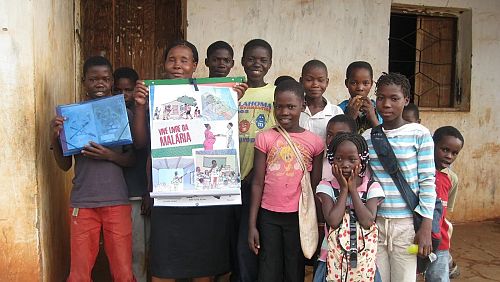
  • Social mobilisation, information, education, and communication activities implemented through community health initiatives, such as training of health activists and carrying out participatory activities with teachers and school children
  • Malaria advocacy
  • Operational research linked to net distribution and use. Research has been regularly carried out on: insecticide efficacy, net tracking, market research and both the perception and use of nets at community level.


Projects Currently Undertaken in Mozambique

Project Title

Funding Organisation

Programme to develop sustainable LLIN delivery systems for malaria prevention in Mozambique

DFID

M4M/Mobilizing for Malaria (malaria advocacy project)

GSK

Health Systems Strengthening

Irish Aid

Integrated Community Case Management

CIDA


Country Progress

The long-lasting insecticidal net distribution system is considered an ideal model and is being used by other organisations interested in supporting MOH on net distribution for pregnant women. From the beginning of the project to August 2009 Malaria Consortium have helped the health authorities to distribute nearly 1.3 million nets.
With Malaria Consortium support almost 700,000 nets have been sold by the private sector. These nets were overwhelmingly sold in rural communities.

Malaria Consortium was successful in developing specific materials for community educators, including:

  1. Developing easy-to-use malaria control messages and training packages for 72 health personnel and 625 community health activists to use with low-literacy target groups
  2. Producing innovative edutainment materials and teacher training.  As a result prevention and positive treatment-seeking malaria messages were supplied to over 90,000 primary school children and 3,000 teachers
  3. Designing and disseminating three interactive radio programmes for use on community and national radio stations. Training and support for radio programmers was also provided.
Radio programmes designed by Malaria Consortium have had such a positive impact that other malaria partners are now interested in replicating this medium as a more effective way of disseminating messages, particularly where local languages are spoken in different regions.

There have been more linkages between malaria and HIV/AIDS. The coalition has collaborated in activities to bring malaria prevention messages into HIV and AIDS programmes along with distributing long-lasting insecticidal nets for people living with HIV and AIDS.